For months now, foreigners and even twin residents have been worried about how their social media histories would possibly have an effect on their means to journey freely to and from the U.S. It’s more and more clear that the reply is rather a lot.
On Tuesday on the Federal Register, U.S. Customs and Border Patrol posted a proposed policy tweak: It now plans to dig round in vacationers’ social media histories earlier than letting them enter, even when they’re coming from a few of the least scrutinized international locations on the earth.
In response to its assertion CBP “invitations the general public to remark” on a collection of newly proposed
modifications. Right here’s quantity 3:
“3. Necessary Social Media:
With a view to adjust to the January 2025 Govt Order 14161 (Defending the USA From Overseas Terrorists and Different Nationwide Safety and Public Security Threats), CBP is including social media as a compulsory knowledge ingredient for an ESTA utility. The information ingredient would require ESTA candidates to supply their social media from the final 5 years.”
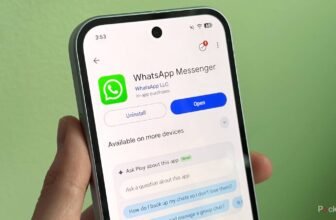
Word that that is for “ESTA” candidates that means the Electronic System for Travel Authorization. This isn’t some extra crackdown on folks, say, affiliated with countries covered by Trump’s travel ban—locations like Afghanistan, Myanmar, Somalia, Sudan and Yemen. That is geared toward vacationers from visa waiver international locations, locations whose residents are theoretically welcomed with open arms. As soon as they get hold of a $40 authorization by way of ESTA—which, funnily sufficient, has an app—folks from visa waiver international locations like Australia, Japan, France, Iceland, the UK and South Korea are usually in a position to journey across the U.S. freely for 90 days.
C.B.P. additionally plans to require different private data, equivalent to e mail addresses from the final ten years, and the addresses, start dates, and different figuring out particulars of all relations of ESTA candidates.
This isn’t the primary such social media crackdown. Earlier this month, the State Division announced a an enlargement of the screening course of for folks making use of for H-1B and Dependent H-4 visas—individuals who plan to maneuver to the U.S. for work causes. In case you’re on this group, you’re advised to “regulate the privateness settings on all of [your] social media profiles to ‘public,’” as a part of the appliance course of, and there’s no point out of solely checking what you’ve posted previously 5 years.
Speaking to the New York Times, Bo Cooper, a consultant of the immigration agency Fragomen stated of the checks on vacationers’ social media posts that because the course of “entails on-line speech, after which denying journey based mostly on discretion and coverage” about what folks have expressed, “It’ll be fascinating to observe the tourism numbers.”
A June research from the World Journey and Tourism Council (as cited by Forbes) discovered that among the many 184 international locations it analyzed, the U.S. was the one one anticipated to see declining tourism numbers in 2025.
Trending Merchandise
Lenovo New 15.6″ Laptop, Inte...

Wireless Keyboard and Mouse Combo &...

Cooler Master Q300L V2 Micro-ATX To...

Acer Nitro KG241Y Sbiip 23.8” Ful...

TP-Link Smart WiFi 6 Router (Archer...

ASUS TUF Gaming 27″ 1080P Mon...

Sceptre 4K IPS 27″ 3840 x 216...

Acer Nitro 27″ 1500R Curved F...

Lian Li O11 Vision -Three Sided Tem...